A complete guide to India’s Liberalised Remittance Scheme, including limits, eligibility, and uses for sending money abroad.
Liberalised Remittance Scheme (LRS): Your Comprehensive Guide to Sending Money from India in 2025
Imagine this: your son is applying for a college in Australia, and you need to send over ₹1.5 million for tuition fees. Or perhaps you’re taking a long-awaited vacation to Europe and plan to send money for hotel bookings. Whatever the reason, it’s common practice to know about LRS, but do you understand how it works?
Having helped a multitude of clients with forex services throughout India, I have come to understand that LRS is actually a well-kept secret and underutilized when used for transferring money internationally. Yet approximately 95% of the population barely scratches the surface of what it offers. From regulation changes to obsolete or expensive alternatives, this guide aims to streamline the process.
In this article, I will walk you through everything you need to know about LRS and how to implement it into your tax return. By the end, you will be fully empowered to utilize LRS and not suffer through unnecessary time delays.
What is the Liberalised Remittance Scheme (LRS)?
The Liberalised Remittance Scheme is relatively new in India’s economic landscape. It grants the resident population the privilege of sending money abroad with minimal regulatory hurdles. This scheme was introduced by the Reserve Bank of India (RBI) back in 2004 and revolutionized foreign exchange accessibility for Indians, as they could now obtain foreign currency without the traditional hassles.
Before the LRS scheme was introduced, remittances had to be sent after waiting for weeks of endless paperwork and RBI approvals. The scheme worked by allowing a streamlined process where Indian residents became eligible for a certain annual sum without the need for prior RBI approval.
Here’s what makes LRS unique: it covers nearly everything any user would expect, from using foreign currency to paying for university tuition, purchasing stocks, or even buying a second home in Dubai. The power lies in how uncomplicated this scheme is.
The LRS principles rest on simple assumptions of providing freedom to Indian residents for managing their foreign exchange transactions, with reasonable restrictions in place to reduce the chances of misuse.
Who is Eligible Under the Liberalised Remittance Scheme?
Understanding the eligibility criteria for LRS is important because getting it wrong could mean transaction rejections and delays.
Eligible Users:
- Residents of India who are 18 years and older
- PAN cardholders
- Anyone who is a resident of India for tax purposes
- Hindu Undivided Families (HUFs) with proper documentation
Important Note: Not all Indians are automatically eligible. The most crucial detail is residential status under the Foreign Exchange Management Act (FEMA); citizenship does not matter.
Who Does NOT Qualify:
- Non-Resident Indians (NRIs)
- Persons of Indian Origin (PIOs)
- Registered firms, companies, and partnership firms
- Trusts and societies
- Minors (with some exceptions)
Many NRIs tend to get this mixed up. Residential status is what determines eligibility, regardless of holding an Indian passport. If you are an NRI, you will have to use different channels for remittances – LRS is not available to you.
The Evolution of LRS Limits
The most common inquiry I receive is, “What’s the annual limit under LRS?” Currently, for 2025, it remains $250,000 per financial year per individual. At today’s exchange rates, this amounts to approximately ₹2.1 crores, a considerable sum that fulfils most offshore financial requirements.
Current LRS Limits (2025-26):
| Category | Per Person Limit | Family of Four Combined Limit |
|---|---|---|
| 2025-26 | $250,000 | $1,000,000 |
| Previous Years | $250,000 | $1,000,000 |
Historical Evolution of LRS Limits:
- 2004: $25,000 (scheme launch)
- 2007: $50,000 (doubled)
- 2008: $100,000 (pre-financial crisis increase)
- 2013: $75,000 (temporary reduction due to economic slowdown)
- 2014: $125,000 (gradual recovery)
- 2015-2025: $250,000 (current stable limit)
The RBI has maintained the limit at a steady $250,000 for over seven years now. This stability shows the central bank believes this is the right balance between personal freedom and regulatory control.
What Transactions Are Permitted Under LRS?
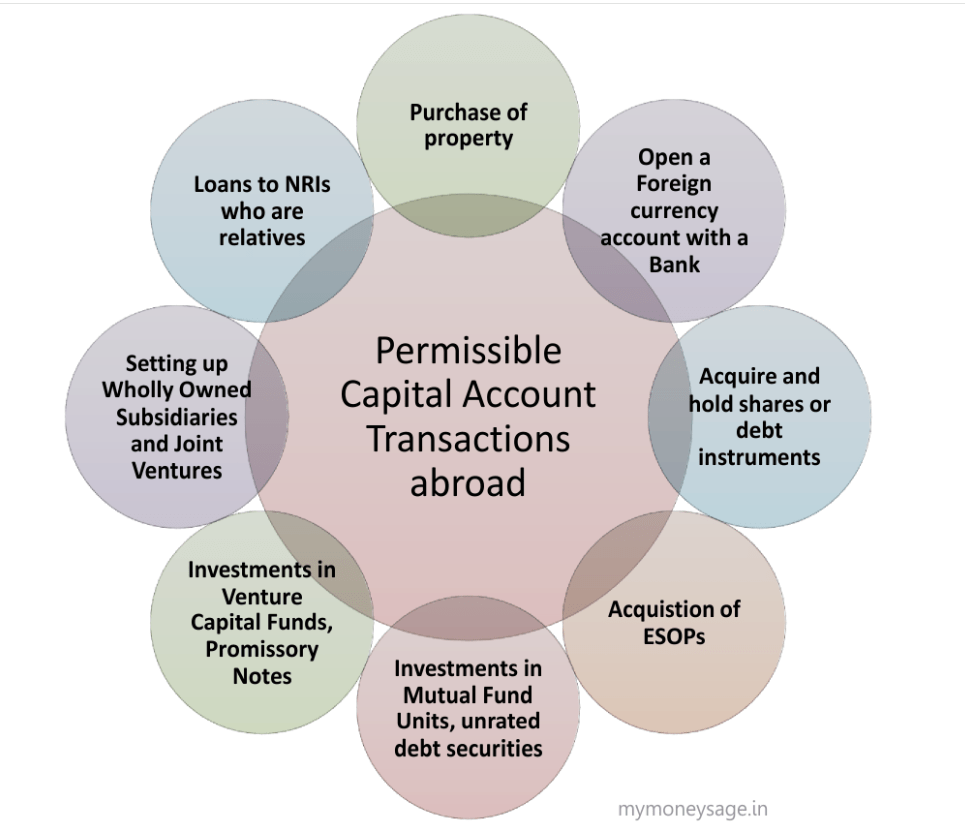
The scope of transactions under LRS is vast, covering most reasonable needs for foreign exchange. Here are the key categories:
1. Education-Related Remittances
LRS for education is perhaps the most popular use case. Parents commonly use LRS to:
- Pay university fees for children studying overseas
- Support living expenses
- GIC & Blocked account transfers
- Rental payments
Real Example: Recently, we assisted a family from Mumbai whose son was pursuing a computer science degree in the US. The family was able to send approximately $45,000 throughout the year for education and living expenses, with funds accessible within one working day.
2. Healthcare Services Overseas
LRS accommodates medical emergencies and planned treatments:
- Emergency medical treatment abroad
- Specialized treatment procedures
- Purchase of medical equipment
- Medical travel expenses
3. Travel and Tourism
LRS for travel covers holiday and work-related expenses:
- Hotel bookings and holiday packages
- International flight tickets
- Travel insurance policies
4. Investment Opportunities
- Real estate investments outside India
- International stock markets and exchanges
- Foreign mutual funds and ETFs
- Investments in gold and precious metals (where permitted)
5. Gifting and Family Maintenance
- Support for relatives residing abroad
- Wedding and celebration funding
- Charitable contributions to registered foreign non-profits
6. Emigration & Employment
- Work visa application fees and processing costs
- Immigration lawyer and legal consultation fees
- Skills assessment and professional qualification verification fees
- Employment verification and background check costs
LRS Documentation Requirements
Incomplete submissions lead to delays, wasting both time and money. Proper preparation is key to avoiding these issues.
Primary Documents (Always Required):
- Form A2 – the core LRS application form
- PAN Card – mandatory for all transactions
- Aadhaar Card – for identity verification
- Purpose-specific supporting documents
Education-Specific Documents:
- University Admission Letter
- Visa (If available)
- Passport
- I-20/CAS (For US/UK)
Medical Treatment Documents:
- Medical Invoice
- Passport
- Flight tickets
- Visa
Travel Documents:
- Invoice
- Flight Tickets
- Visa
- Passport
Common Documentation Mistakes to Avoid:
- Incomplete Form A2 – all fields must be filled correctly
- Outdated documents – Expired Visa/Admission letter
Understanding Tax on LRS Remittances
Tax regulations on LRS remittances have evolved considerably, particularly regarding TCS (Tax Collected at Source) policies.
TCS Rates (2025):
For Education and Medical Purposes:
- 5% TCS on amounts over ₹10 lakhs annually
- Applied only to the excess amount
For Other Purposes:
- 20% TCS on amounts over ₹10 lakhs annually
- Includes travel, investments, and gifts
TCS Calculation Examples:
Example 1 – Education TCS:
- Remittance amount: ₹15 lakhs
- TCS applicable on: ₹15 lakhs – ₹10 lakhs = ₹5 lakhs
- TCS Amount: ₹25,000 (₹5 lakhs × 5%)
Claiming TCS Refund:
TCS can be claimed as a refund since it’s treated as an advance tax payment:
- Report the TCS amount in your ITR
- Offset against total tax liability
- If TCS exceeds liability, initiate the refund process
- Processing typically takes 4-6 months
Recent Changes and Updates
Key Updates 2024-25:
- Enhanced Digital Processing – More remittance partners offer complete online LRS processing
- Stricter Documentation Requirements – Enhanced reporting for certain transaction types
- Clarified TCS Rules – Clearer guidelines on TCS exemptions
Budget 2025 Impact:
The latest budget has significantly revised LRS TCS provisions, easing the compliance burden on taxpayers. The TCS threshold for remittances under the Liberalised Remittance Scheme increased from ₹7 lakh to ₹10 lakh per financial year, effective April 1, 2025. TCS no longer applies to educational remittances funded through recognized financial institution loans. Despite this relief for overseas remittances, the government maintains strong enforcement measures in other areas to ensure tax compliance.
LRS Violations and How to Avoid Them
LRS violations can result in monetary penalties or legal action. Here are common mistakes and prevention strategies:
Common Violations:
- Exceeding Annual Limits – Results in automatic rejection and RBI reporting
- Multiple Bank Usage – Using different banks to circumvent limits
Maximizing LRS Benefits
Optimal Timing for Transactions:
- Best Months: April-May (post-tax season stability) and October-November (pre-festive season)
- Avoid: March (year-end volatility)
Strategic Planning:
- Spread large transactions across the financial year
- Monitor exchange rate trends
- Plan documentation well in advance
Conclusion
The Liberalised Remittance Scheme represents financial freedom for Indian residents, the ability to engage globally while staying within regulatory frameworks. Whether funding your child’s overseas education, exploring international investments, or taking that long-awaited vacation, LRS provides the structure to achieve your goals.
Remember, effective LRS usage isn’t just about knowing the rules; it’s about optimizing them for your needs. Take transactions step by step, build relationships with your bank’s forex team, stay updated on policy changes, and most importantly, document everything meticulously for compliance and peace of mind.
With LRS as your tool and this guide as your roadmap, navigating international finance becomes significantly simpler. Your global financial journey starts with that first LRS transaction. Make it count.
Ready to begin your LRS journey? Start by organizing your documentation and contacting your bank’s forex department. A world of international opportunities awaits you.
Frequently Asked Questions
Who is eligible for LRS?
Indian residents aged 18 and above with valid PAN cards are eligible. This includes individuals and Hindu Undivided Families (HUFs). NRIs, companies, and minors are not eligible.
What is the annual limit under LRS?
The current limit for 2025 is $250,000 per individual per financial year. This limit resets every April 1st and cannot be carried forward.
What transactions are allowed under LRS?
Permitted transactions include educational expenses, healthcare costs, travel, overseas investments, family maintenance, gifts, and certain business consultancy services. Direct business investments and illegal activities are prohibited.
Do I need RBI approval for LRS transactions?
No prior RBI approval is required for LRS remittances within prescribed limits and for permissible purposes. However, proper documentation and reporting requirements must be followed.
Can I use multiple banks for LRS
While not legally prohibited, using multiple banks for LRS transactions within the same financial year is not recommended as it increases regulatory scrutiny and complicates record-keeping.
What happens if I exceed the LRS limit?
Transactions exceeding the $250,000 annual limit will be rejected. No further LRS transactions will be possible in that financial year, and amounts above the limit require special RBI approval.
How long does LRS processing take?
Complete online applications are typically processed within 1-3 working days. Branch submissions take longer, and incomplete documentation can cause additional delays.
Can I cancel an LRS transaction?
Yes, transactions can be cancelled before processing. However, once funds reach overseas accounts, cancellation becomes complex and may incur additional charges.
 Site Title
Leave a comment