Understand cryptocurrency basics, how it works, and explore popular coins making headlines in the 2025 digital economy.
What is Cryptocurrency? Your Complete 2025 Guide to Digital Money Basics
Do you still remember the times when your grandparents would keep their cash savings under the mattress? The modern generation also saves their money, but not in the physical world. Their savings are found in virtual wallets only accessible in the digital realm. This is what cryptocurrency is all about. If you’ve been living under a rock and wondering about the reason behind the immense hype, rest assured that many others are like you.
Allow me to help you understand cryptocurrency at this stage. Of course, this guide will be helpful for people who are scared of jargon and technical terms too, so whether you are someone born yesterday just looking for some additional income through digital assets or someone with experience, there will be something for everybody.
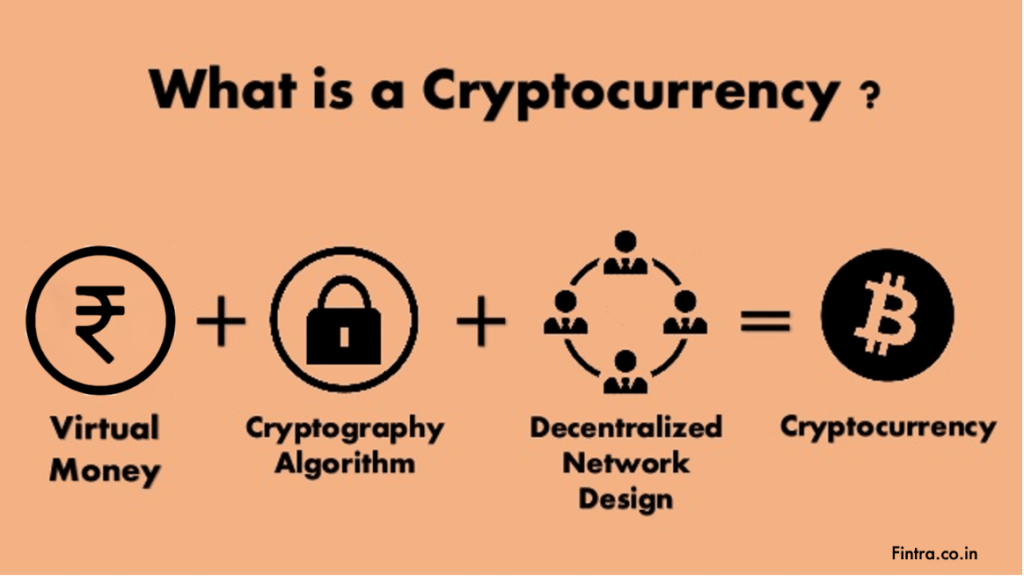
Understanding Cryptocurrency -Basics of cryptocurrency Simplified
The Definition People Still Cannot Get Over
Cryptocurrency is something that can be understood as a new form of money. Consider it an internet phenomenon or manifestation of development. Like traditional currency, there is also a digital equivalent of it, which we talk about as “cryptocurrency.” It cannot be controlled or manipulated, unlike monetary funds.
This is the highlight of cryptocurrency:
- Lacks a tangible aspect – Bitcoin cannot be grasped like a dollar bill would be languidly held
- Loss of central oversight – no single authoritative body overseeing the cryptocurrency makes it more secure
- Advanced mathematics can offer custody to your funds – cryptocurrency adopts an advanced systematic approach to secure funds.
- Universal acceptance – limited only to regions that have the internet
Losing or having it confiscated isn’t a possibility, just like the digital dollar, bound by complex mathematical codes, it requires zero means of government backing.
How It Differs from Conventional Fiat Currency
When talking about cryptocurrency, a tweet comes to mind – the same way emails replaced letters, with more advantages, convenience, and quicker. Email dominates correspondence, and crypto is dominating the monetary terrain.
In the olden days, physical cash used to depend on governance. Crypto for beginners requires:
- Approval of currency exchange and payments
- Ensuring anti-money laundering
- Secure the protection of funds
- Credit card debt maintenance
Every single minute of the processes detailed above is done automatically through:
- Systems placed miles away
- Computer systems
- Calculation of complex algorithms
- Visible databases
- Automated systems of approval
Now, sending money to a friend located in Tokyo is as simple as sending a text – no maintenance fees while transferring value.
Breaking Down Cryptocurrency By Using Blockchain Technology
Blockchain technology is central to the operation of any cryptocurrency. I prefer to think of blockchain technology as a ledger that stores information permanently and is duplicated millions of times around the globe on different computers.
Picture a scenario where a group of people (you and your friends) keep a note of debts in a physical notebook. Each time someone’s debt is settled (money owed is paid), a note is made in the notebook. Now say that this notebook:
- Is replicated in all group members’ cellphones
- Gets updated in real time as transactions occur
- Cannot have transactions and their corresponding records removed or forged
- Is transparent to all group members
This is precisely how cryptocurrency works – instead of friends having phones, we have thousands of computers maintaining all records.
How Does Cryptocurrency Work? The Complete Process Explained
Mining And Validation – The Network’s Security Guards
You could perhaps be thinking that such a system cannot be maintained with integrity. How do you ensure that this entire system is kept honest? With cryptocurrency mining, which, by the way, isn’t anything like gold digging.
Essentially, miners are digital accountants who:
- Gather awaiting transactions from the network
- Ensure each transaction is validated
- Capture the block after resolving intricate mathematical puzzles
- Add the confirmed block to the blockchain
- Earning cryptocurrency as a reward for their efforts
In Bitcoin, new blocks are added roughly every ten minutes. This process is akin to having thousands of independent auditors verifying the same transaction – if there is a unanimous agreement, it is deemed valid.
Cryptocurrency Wallets: Your Money Storage Digitally
Consider a crypto wallet as a digital bank account. However, it differs in several key ways. Your wallet does not hold cryptocurrency directly (it’s data on the blockchain), rather it contains:
- Your public address serves as an account number that can be viewed by others
- Your private key is akin to a password and should remain confidential
Types of cryptocurrency wallets:
| Wallet Type | Security Level | Convenience | Best For |
|---|---|---|---|
| Hardware Wallets | Highest | Low | Long-term storage |
| Software Wallets | Medium | High | Everyday transactions |
| Mobile Wallets | Medium | Highest | Quick-access payments while on the go |
| Web Wallets | Lowest | Highest | Beginners, small amounts |
As an instructor, I advise students: do not ever share your private key. That would be like providing the PIN to your debit card, allowing unrestricted access to everything.
Transaction Process – From Click to Confirmation
Let’s take a closer look at the transactions involving sending cryptocurrency to someone:
- The transference begins through the individual’s wallet application
- The wallet generates the transaction specifying the sitting data, address, and requisite amount
- The transaction is propagated to the network
- Your transaction is picked up by the miners, who make sure it is legitimate
- The new block now contains your transaction
- The blockchain now has your block
- The cryptocurrency appears in the recipient’s wallet
The cryptocurrency’s entire working in this manner will complete in roughly 10 minutes to about one hour, while international bank transfers can take anywhere from three to five business days!
Types of Cryptocurrency – The Digital Money Ecosystem
Payment Cryptocurrencies – Digital Cash Alternatives
Bitcoin (BTC) remains the king of payment cryptocurrencies. Designed in the year of 2009, it aims to be the gold of the digital world, possessing value and facilitating trade. Even so, the market is not empty on the payment side.
Additional relevant cryptocurrencies for payments include:
- Litecoin (LTC) – Transactions are quicker compared to Bitcoin
- Bitcoin Cash (BCH) – Less expensive for everyday transactions
- Dash – More privacy-oriented
- Monero (XMR) – Total anonymity with transactions
These cryptocurrencies are especially effective as a money transfer tool, as they sidestep the slow and costly traditional banking systems.
Smart Contract Platforms – Money That Can Be Programmed
Ethereum (ETH) made a groundbreaking innovation with smart contracts. They can be defined as self-executing agreements that, when certain criteria are fulfilled, will automatically be executed. Think about them as:
- Vending machines that release goods on payment
- Insurance policies that pay out claims on triggering events
- Rental contracts that unlock access upon receiving payment with automatic payment confirmation
This cryptocurrency explained concept expands beyond mere transfers, facilitating sophisticated financial operations without requiring any intermediaries.
Stablecoins – The Reliable Ones
Stablecoins address the most volatile issue of cryptocurrency: price fluctuation. These cryptocurrencies are linked to stable assets like the US Dollar, and thus they keep their value.
Some of the most popular ones are:
- USDC – Pegged to US Dollar reserves
- USDT (Tether) – The most popular stablecoin
- DAI – A decentralized stablecoin guaranteed by crypto collateral
To me, stablecoins are the best fit for crypto for beginners who wish to try out digital currencies without the hassle of worrying about volatility.
Leading Cryptocurrency Coins Forecast For 2025 – Industry Comparison
Complete Review of Leading Cryptocurrencies
| Cryptocurrency | Symbol | Primary Use Case | Launch Year | Key Advantage |
|---|---|---|---|---|
| Bitcoin | BTC | Digital Gold/Payments | 2009 | First mover, most secure |
| Ethereum | ETH | Smart Contracts/DeFi | 2015 | Programmable blockchain |
| Binance Coin | BNB | Exchange Ecosystem | 2017 | World’s largest exchange |
| Solana | SOL | High-Speed DApps | 2020 | Ultra-fast transactions |
| Cardano | ADA | Sustainable Blockchain | 2017 | Research-driven approach |
| XRP | XRP | Cross-Border Payments | 2012 | Bank partnerships |
| Polygon | MATIC | Ethereum Scaling | 2017 | Lower fees, faster speed |
Bitcoin (BTC) – The First and Foremost Cryptocurrency
They say that the first is always the best, and in Bitcoin’s case, the adage holds. Bitcoin accounted for over 40% of the crypto market capitalization, as the foremost cryptocurrency in circulation. Created alongside the first block of the cryptocurrency network in 2009, the digital currency system has flourished ever since, adapting successfully to new upgrades and overcoming challenges along the way.
Some key features of the Bitcoin network are:
- Limited supply of 21 million coins (scarcity creates value)
- Decentralized network of over 15,000 nodes worldwide
- Proof-of-Work security makes it extremely difficult to hack
- Global recognition as “digital gold”
Embracing BTC value adds advantages far exceeding speculation returns. Already accepted by over 200 partners globally, along with nations like El Salvador recognizing it as a national currency, BTC provides unmatched utility.
Ethereum (ETH) – The Forerunner in Smart Contracts
Ethereum is to ‘oil’ what Bitcoin is to ‘gold’, as it ‘powers’ an expansive array of applications. Ethereum didn’t just create another currency; it created a world computer where anyone can build applications.
Ethereum features are:
- Smart contracts that execute agreements autonomously
- Decentralized applications (DApps) run without central servers
- DeFi protocols are recreating traditional finance without banks
- NFT marketplace enabling digital ownership
With over one million transactions processed every single day, this demonstrates cryptocurrency in real-life applications beyond simple payments.
Real-World Cryptocurrency Applications in 2025
Decentralized Finance (DeFi) – Banking Without Banks
For now, DeFi offers the world’s cryptocurrency users the greatest convenience. Why travel to a physical bank branch when one can access services like getting loans, opening savings accounts, or even making insurance online through smart contracts?
Some known applications for DeFi:
- Lending Platforms – Get paid to lend your crypto or borrow against it
- Decentralized Exchanges – Trade any cryptocurrency without a broker
- Yield Farming – Provide liquidity and be rewarded
- Insurance Protocols – Insure your crypto investments from losing value
Through personal experience, I have never been able to locate a savings account that offers a better interest rate than what an average DeFi platform does, providing easier 24/7 accessibility.
Cross-Border Payments – Speeding Up International Money Transfers
The process of sending money to different countries using traditional methods is cumbersome. Banks and other financial institutions demand exorbitant fees, take an unlimited number of days to process payments, and often require multiple third parties. These problems are effortlessly solved using cryptocurrency.
Here is a real-world example of sending $1,000 from New York to Mumbai:
| Method | Period | Cost/Service Charge | Requirements |
|---|---|---|---|
| Bank Wire | 3-5 days | $25-50 | Bank accounts, paperwork |
| Remittance Service | 1-2 days | $15-30 | Physical locations |
| Cryptocurrency | 10-60 minutes | $1-5 | Internet connection |
Cryptocurrency’s capability of performing money transfer online Fairexpay has increased its popularity in countries with unstable currencies or regions with poor banking infrastructure.
Supply Chain Transparency
The immutable records on the blockchain make it perfect for keeping track of everything from the genesis of the product to the consumer. Businesses adopt crypto-based systems to:
- Validate counterfeits (combating fake products)
- Monitor the food supply chain compliance and safety
- Ensure CSR compliance related to the sourcing of materials
- Automated regulatory compliance reporting
Retailers like Walmart have embraced blockchain technology, and instead of weeks, they can now identify food contamination sources in mere seconds.
Beginning Your Journey into Cryptocurrency – An Actionable Framework
Step 1: Setting Up Your First Account
Cryptocurrency exchanges are digital platforms that allow you to buy and sell cryptocurrencies. As a beginner, I advise starting with more intuitive interfaces:
Best recommended exchanges for beginners:
- Coinbase – Best interface and most user-friendly
- Binance – Lowest trading fees
- Kraken – Strong reputation for security
- Gemini – Focus on compliance with regulations
Step 2: Take Your Time to Gain Experience
Never invest more than you can afford to lose. The market can be highly unpredictable, and with that comes opportunity for huge losses. For maximum value in this step, I recommend:
- Investing $50-100 to understand the framework
- Purchasing larger coins, such as Bitcoin or Ethereum, first
- Practicing dollar-cost averaging by investing smaller amounts over time
- Maintaining detailed records to claim relevant tax benefits
Step 3: Protect Your Investment
Following this guide can help you defend your money:
- Utilize two-factor authentication on all accounts
- Set and store unique passwords for each platform
- Consider a hardware wallet if you’re holding large sums
- Private keys ought not to be shared
- Backup codes should be stored offline in a safe place
Understanding Cryptocurrency Risks and Challenges
Market Volatility – The Wild Price Swings
Price volatility is a characteristic of the cryptocurrency industry. For example, Bitcoin can fluctuate between 10 to 20 percent daily. This would not be sustainable for traditional currencies.
This volatility arises from:
- The near infancy and stage of development for this market
- Speculation and hype cycles
- Confidence of market participants in the market framework
- Low liquidity in smaller cryptocurrencies
Security Threats – Protecting Your Digital Assets
The inability to reverse transactions in cryptocurrencies increases the importance of security. Some of the common security threats are:
- Phishing attacks steal login credentials
- Fake exchanges and wallet applications
- SIM card swapping for two-factor authentication bypass
- Social engineering tricks aimed at obtaining private keys
Real-world case study: In 2022, hackers stole over $3 billion worth of cryptocurrency through various attacks. However, users who followed proper security practices remained largely unaffected.
Conclusion:
Cryptocurrency represents a fundamental shift in our conception of currency. Despite the seemingly intricate nature of the technology, its primary promise is straightforward: empowering people with unconditional sovereignty over their financial activities without the need for traditional gatekeepers.
Whether you’re interested in cryptocurrency as an investment, a money transfer tool, or simply want to understand this technological revolution, remember that education is your best investment. Start small, prioritize security, and never stop learning about this rapidly evolving space.
The future of money is already here – it’s simply a matter of time before the conversation comes to your doorstep waiting for you to join it.
Frequently Asked Questions About Cryptocurrency
How does cryptocurrency work?
Cryptocurrency utilizes blockchain technology – a distributed ledger system that registers all transactions within a network of computers. When sending cryptocurrency, participants (or miners) validate the transaction, it gets recorded in the blockchain, and subsequently, it becomes immutable. All of this is protected by extensive cryptographic algorithms that prevent any fraudulent activity.
What are the top cryptocurrencies in 2025?
The most impactful cryptocurrencies by market value are:
- Bitcoin (BTC) – The first and foremost cryptocurrency that remains exceptionally valuable
- Ethereum (ETH) – The leading smart contracts provider
- Binance Coin (BNB) – The native token of the world’s largest exchange
- Solana (SOL) – A blockchain offering high performance for applications
- Cardano (ADA) – A blockchain with a focus on research
Is crypto legal in all countries?
Each country has its own rules regarding cryptocurrency. Most developed countries allow for the possession and trading of cryptocurrency; however, some countries place restrictions or outright bans. The United States, European Union, Japan, and Canada are generally favorable; on the other hand, China and India impose numerous restrictions. As always, check your local laws before investing.
How do I start investing in cryptocurrency?
Initiating your journey into cryptocurrency requires taking the following five essential steps:
- Creating an account on a trusted exchange such as Coinbase, Binance, or Kraken
- Completing the KYC identity verification steps
- Making initial purchases with small amounts of top cryptocurrencies
- Storing large amounts in hardware wallets for better security
- Keeping abreast of market developments and learning about technology
Can I lose all my money in cryptocurrency?
Yes, cryptocurrency investments are laden with tremendous risk. There can be price slumps, exchange hacks, and inaccessible wallets. On the brighter side, risk can be somewhat mitigated via diversified investments, trustworthy platforms, following security protocols, and always using the mantra to never invest more than what one is willing to lose.
What happens if I lose my wallet password?
Losing the password to your cryptocurrency wallet can result in permanent loss of funds. Unlike banks that can reset passwords, cryptocurrency wallets are protected with private keys that only the owner holds. Hence, storing backup phrases (seed words) that can restore your wallet is critical. Write them down physically and store them in multiple secure locations.
 Site Title
Leave a comment